Bibimbap (Korean Rice Bowl)
비빔밥
Ingredients
Serves 4-6
BEEF BIBIMBAP
- 115g of fresh beef, very thinly sliced, preferably bulgogi meat or rib eye
- 875g of rice, steamed
- 100g of beansprouts, tails and soft pieces removed, rinsed and dried
- 55g of shiitake mushrooms, de-stemmed and cut into 5mm slices
- ½ courgette thinly sliced on an angle
- 85g of mangetout
- 1 carrot, julienned
- 180g of baby spinach
- 115g of kimchi, drained and chopped
- 1 Tbsp of mirin
- 1 Tbsp of toasted sesame oil
- Vegetable oil for frying
SEASONING
- 1 Tbsp of toasted sesame oil
- 3 Tbsp of soy sauce
- 2 Tbsp of mirin
- 2 garlic cloves, finely chopped or grated
- 1 tsp fresh ginger, grated
- 1 tsp toasted sesame seeds, crushed
GOCHUJANG SAUCE
- 3 Tbsp of gochujang
- 2 ½ Tbsp of mirin
- 2 tsp sugar
- 2 tsp toasted sesame seeds
- 1 tsp toasted sesame oil
- 1 tsp spring onions, finely chopped on an angle
TO SERVE
- 3 eggs, large
- black sesame seeds
Method
Place a large heavy-based frying pan (preferably cast iron) over a medium heat. Add a tablespoon of sesame oil and spread the cooked rice over the bass of the frying pan in a loose layer. Cook, undisturbed, for 8–10 minutes (until the bottom of the rice develops a golden crust) while you prepare the toppings.
Meanwhile, prepare the dressing. Mix together the mirin, soy sauce, sesame oil, garlic, ginger and sesame seeds in a small bowl. Mix 2 tablespoons of the sauce with the beef and sugar and set aside. Set the remaining seasoning sauce by the hob.
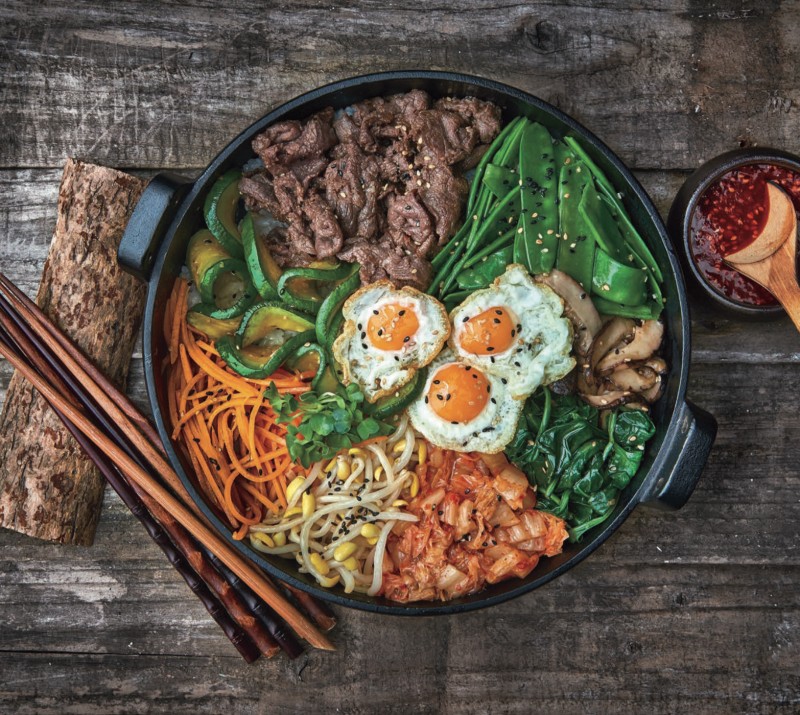
As each vegetable topping is finished, arrange it on a section of the rice in the pan so the toppings resemble the spokes of a bicycle wheel. In a medium non-stick frying pan, heat half a teaspoon of vegetable oil over a medium-high heat. Add the beansprouts and 1 teaspoon of the seasoning and cook, stirring, until crisp-tender, about 30 seconds. Arrange the beansprouts on a section of the rice.
Heat 2 teaspoons of oil in the frying pan, add the beef and cook for 1–2 minutes until cooked through. Arrange the beef on the rice.
Heat 1 tablespoon of oil in the frying pan, add the mushrooms and 1 tablespoon of the dressing and cook for 1 minute until tender. Arrange the mushrooms on the rice.
Heat half a teaspoon of oil in the frying pan, add the courgette and 2 teaspoons of the sauce and cook for 1 minute until just tender. Arrange the courgette on the rice.
Heat half a teaspoon of oil in the frying pan, add the mangetout and 2 teaspoons of the sauce and cook for 45 seconds until crisp-tender. Arrange the mangetout on the rice.
Heat half a teaspoon of oil in the frying pan, add the carrot and 1 teaspoon of the sauce and cook for 30 seconds until crisp-tender. Arrange the carrot on the rice
Finally, heat 1 teaspoon of oil in the pan, add the spinach and 1 tablespoon of the sauce and cook for 30 seconds until just wilted. Arrange the spinach on the rice.
Deglaze the pan with mirin, scraping up any browned bits from the base. Spoon the juices from the pan over the beef on the rice.
Meanwhile, place a separate frying pan over a medium-high heat and fry the eggs in a little oil until the edges begin to crisp.
For the gochujang sauce, simply stir together all the ingredients in a small bowl or serving dish.
Remove the rice from the heat and arrange the kimchi over the remaining section of rice. Spoon the gochujang sauce on the centre of the rice or serve on the side, if you like. Arrange the fried eggs over the dish and sprinkle the bibimbap with black sesame seeds and radish sprouts, if liked.
To serve, bring the pan to the table, set it on a trivet and mix everything together before spooning into bowls.
Judy’s Korea
Judy’s ultimate guide to Korean food. Get started on your journey! Find out the chef’s top kitchen necessities and best places to eat in Seoul.
Restaurants
Explore Seoul’s fun, vibrant and colourful flavours at our Korean-American street-food restaurant: Seoul Bird. Visit and celebrate with us.
Prawns in chili with asparagus
Mini Souffle Pancakes with Blood Orange Maple Syrup
Doenjang Jjigae (Korean Fermented Soybean Stew)
Shop online
Shop cookery books and affiliated discounts for Judy’s favourite luxury kitchenware, home accessories and beauty products.