SALTED CARAMEL PANCAKES
HOTTEOK
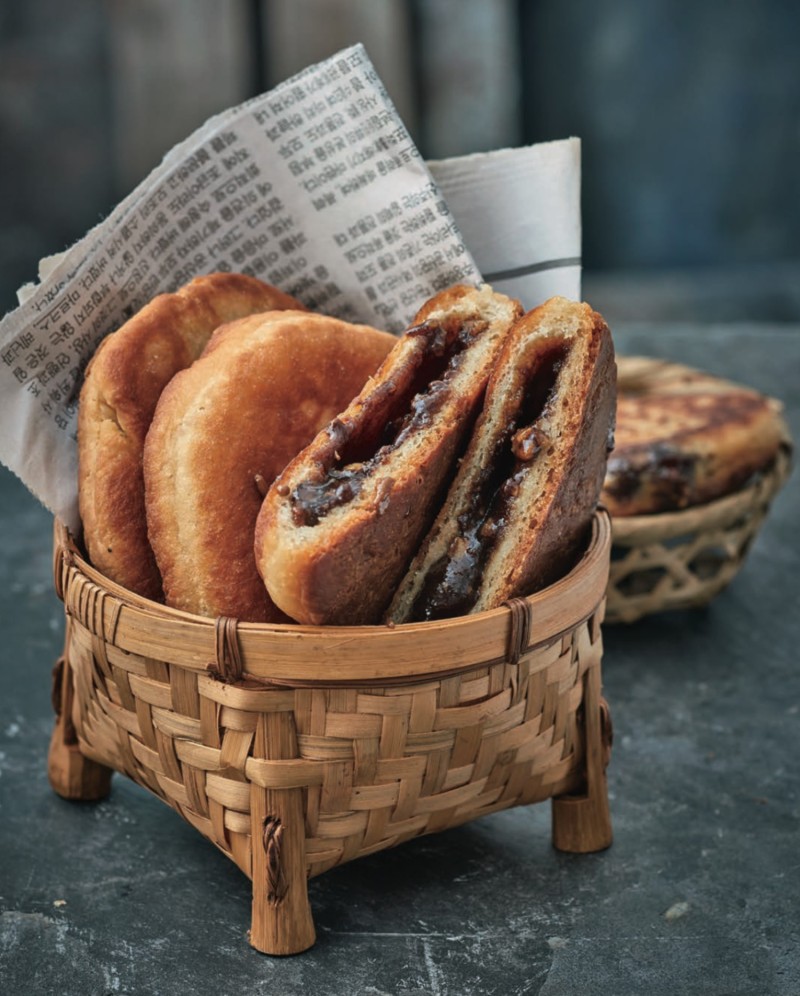
Hotteok, sweet pancakes filled with a brown sugar syrup and nuts, are beloved by young and old alike. These decadent treats were my sister Sonya’s choice dessert when we were kids. In each bite, you crunch through a crispy golden crust, then through a chewy dough and finally into a gooey centre. I’ve jazzed up the classic recipe by substituting the brown sugar with muscovado sugar, which is richer and ‘oozier’ when melted, and mixing it with a touch of salt. Feel free to make your own version as well – I’ve seen these pancakes filled with everything from walnuts and honey to mixed seeds. And they’re even better with a scoop of vanilla ice cream and/or whipped cream on top.
Ingredients
MAKES ABOUT TEN 10 CM (4 IN) PANCAKE
Dough:
- 360 ml (12 fl oz) whole milk
- 2 tbsp granulated sugar
- 1 pack (7 g/1⁄4 oz) instant yeast
- 225 g (8 oz) bread flour, plus extra for dusting
- 150 g (51⁄2 oz) sweet rice flour
- 11⁄2 tbsp cornflour
- 1⁄2 tsp sea salt
Filling:
- 125 g (41⁄2 oz) muscovado sugar
- 75 g (23⁄4 oz) peanuts, roughly chopped
- 1 tbsp ground cinnamon
- 3⁄4 tsp sea salt
- Vegetable oil, for frying
Method
FOR THE DOUGH:
- In a very small saucepan, heat the milk to about 41°C/105°F. Remove from the heat, add the sugar and yeast and whisk until they have dissolved. Leave to stand in a warm place for 3–5 minutes, or until bubbling, to activate the yeast.
- In a large bowl, combine the bread flour, rice flour, cornflour and salt. Slowly stir in the warm milk mixture until a sticky dough forms. Shape the dough into a ball in the base of the bowl and cover the bowl with a clean damp tea towel.
- Leave the dough to rise in a warm place for 11⁄2–2 hours until doubled in size. Knock it back and let it rise for 11⁄2 hours until doubled in size again.
FOR THE FILLING:
- Meanwhile, in a small bowl, mix together the muscovado sugar, peanuts, cinnamon and salt.
- After the dough has risen a second time, dust a clean work surface with flour and turn the dough out onto it. Dust the top of the dough with some more flour and knead it a few times. Shape the dough into a fat, long log.
- Cut the dough into ten equal pieces, shape each piece into a ball, set on the floured work surface, and cover with a clean tea towel or clingfilm. Dusting with flour as needed to prevent sticking, press a dough ball into a 10 cm (4 in) wide disc using your fingertips. Make sure the disc is uniformly thick so the finished pancake will be evenly filled with caramel.
- Put the disc in your hand and slightly cup it. Spoon 11⁄2–2 tablespoons of the filling into the centre of the disc. Seal the disc closed by wrapping the dough around the filling and pinching the edges together at the top. Once sealed, reshape gently to form a ball, set with the seam side down on the floured work surface and cover with a clean tea towel or clingfilm. Repeat with the remaining dough balls and filling.
- In a large non-stick frying pan, heat 3 tablespoons of oil over a medium-high heat. Put two or three dough balls seam-side down in the pan and immediately flatten them with a spatula to a width of about 10 cm (4 in). Reduce the heat to medium-low and fry the pancakes for 3–4 minutes until golden brown and crispy on the bottom. Flip them and cook for a further 3–4 minutes until slightly springy to the touch.
- Transfer the pancakes to a wire rack or kitchen paper-lined plate when done. Repeat with the remaining dough balls, wiping the pan clean and adding fresh oil for each batch. Leave the pancakes to cool slightly before serving. Beware, it’s easy to burn yourself in your haste to gobble these up, as the insides are hot and oozing.
Judy’s Korea
Judy’s ultimate guide to Korean food. Get started on your journey! Find out the chef’s top kitchen necessities and best places to eat in Seoul.
Shop online
Shop cookery books and affiliated discounts for Judy’s favourite luxury kitchenware, home accessories and beauty products.
Ultimate Korean Fried Chicken
KIMCHI-APPLE SLAW
Restaurants
Explore Seoul’s fun, vibrant and colourful flavours at our Korean-American street-food restaurant: Seoul Bird. Visit and celebrate with us.