Equipment

My ultimate kitchen necessities. Korean cooking has never been easier!

Click/tap on an image to see a larger version.

Blender
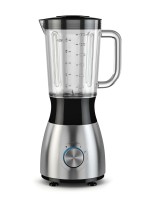
Blender

Blenders are not essential; however, a handheld blender can be useful when making marinades, mashing mung beans for pancakes, and for blitzing soy beans for soups.

Cast Iron Pot

Cast Iron Pot

A cast iron pot is great for braising as it locks in moisture and retains heat evenly. It’s the perfect tool for making Korean hot pots, stews and soups. Keep it on a low heat to prevent food from catching.

Ceramic Bowl (Ttukbaegi)
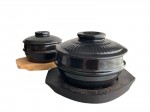
Ceramic Bowl (Ttukbaegi)

These Korean earthenware bowls are designed for cooking and/or serving stews and soups as they are excellent heat retainers. Traditionally, Ttukbaegi arrives at the table bubbling and steaming.

Chopsticks

Chopsticks

Chopsticks are great utensils for eating with, and for cooking. Cooking chopsticks are longer and usually made from a material low in temperature conduction, such as bamboo. Of course, they are not vital when cooking Korean food, but chopsticks can be useful when dealing with items that need precise turning, such as dumplings.

Colander

colander

A large colander or strainer is useful for rinsing and washing large portions of vegetables, including cabbage leaves when making Kimchi; and straining noodles.

Food Processor

Food Processor

This is a fundamental item in any Korean kitchen because it saves so much time! Korean cooking involves a lot of chopping, grating, slicing and mincing, and so a decent quality food processor is a valuable piece of kit, and great for making kimchi paste.

Gloves

Gloves

Korean cooking is very hands on. To create this soul food, one is required to get their hands dirty and connect with the ingredients. Sense of touch is just as important as smelling, seeing and tasting when preparing food in Korea. Gloves are not mandatory, but come in handy when dealing with chillies, raw meats and fish, and making kimchi.

Griddle Pan

Griddle Pan

While not essential, griddle pans are sometimes fun to use as they leave meats, fish and vegetables with beautifully charred lines and a smoky aroma. They are also a great alternative to gas or charcoal grills when preparing a Korean style barbecue.

Hotteok Press

Hotteok Press

Hottoek is a sweet donut-like pancake that is usually filled with sugar and cinnamon. This crispy delicacy is a sought-after Korean street-food snack. Because they are so popular and widely made at home, Koreans have a special tool to help create the perfect shaped pancake.

Large Cast Iron Pan
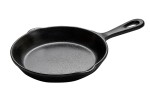
Large Cast Iron Pan

Cast iron pans are preferable than non-stick pans because they last longer, are not easily scratched, and overall sturdier. They are also excellent heat retainers and so work well for stir-fries.

Mandolin Slicer

Mandolin Slicer

Having a mandolin slicer is always convenient. There are many dishes in Korean cuisine that require thinly sliced vegetables for salads and pickling. A mandolin slicer will win the battle of consistency over a knife any day.

Measuring Spoons

Measuring Spoons

Measuring spoons allow for accuracy. They are useful when following Korean recipes due to the large number of different ingredients spices used.

Microplane

Microplane

Microplane is a brand, and any grater is better than no grater! Microplanes tend to have extremely sharp blades, and so are superior. It is useful to have a Microplane to mince garlic, grate ginger, and zest limes.

Mixing Bowls

Mixing Bowls

Mixing bowls are imperative in any cuisine, but especially in Korean cuisine due to the large volume and array of ingredients used. Having an assortment of various sizes will always be useful.

Onggi

Onggi

Onggi is a Korean earthenware widely used to store fermented foods including kimchi, gochujang and doenjang. Its microporous clay walls draw in oxygen and push out impurities, aiding the fermentation process.

Peelers

Peelers

Having a good vegetable peeler makes life a lot easier. Peelers are great kitchen utensils and are used a lot in Korean cooking, whether for peeling daikon or carrots, or Asian pears, you will use a good sharp peeler often.

Rice bowls

Rice bowls

Koreans like to serve rice in bowls with lids to keep the rice warm. They are the perfect size to cradle a portion of freshly steamed rice.

Rice Cooker

Rice Cooker

Rice is a staple in Korea and so every household will have a rice cooker to guarantee perfectly plump and fluffy rice every time. Nowadays, rice cookers are also pressure cookers that can make juk (congee) and various other dishes too. They are worth the investment.

Rice rolling mats

Rice rolling mats

These bamboo mats are an essential tool to make easy and quick kimbap rice rolls. They can also be used for shaping other soft foods such as omelettes.

Scale

Scale

A kitchen scale eliminates the need for a clutter of various measuring cups. Top tip: milligrams (ml) are equal to grams (g) when measuring certain liquids like water. So, 250 ml of water can be measured as 250g on a scale.

Scallion cutter

Scallion cutter

This simple yet swanky tool is used for shredding scallions/spring onions. It is inexpensive, and allows home cooks to easily produce restaurant quality scallion wisps for salads and garnishes.

Scissors

Scissors

A sharp pair of scissors is of course essential. Koreans use them to cut just about everything, from meat and fish to Kimchi and vegetables.

Sharp Knives

Sharp Knives

A blunt, cheap knife is not only difficult to work with, but can also be seriously dangerous. Investing in a good set of knives will turn chopping from a chore to a joy.

Skewers

Skewers

Many Korean street-food delicacies involve skewering. From meat to seafood to rice cakes, having a bag of skewers at home is always useful, especially when hosting a Korean barbeque.

Spatula

Spatula

Of course, a spatula is a must-have kitchen utensil. It especially comes in handy when flipping jeon (Korean pancakes) and Hottoek (Korean sweet pancakes).

Stock Strainer/Infusers

Stock Strainer/Infusers

Korean stock strainers look and work similar to tea strainers. They usually comprise a stainless-steel basket which clasps together to hold herbs, dried anchovies, kelp, and other ingredients needed to flavour stock. After the flavour has boiled out, the contents of the strainer will be bitter and so are discarded.

Steamers

Steamers

There are many types of steamers that one can use for Korean cooking. It boils down to personal preference. Bamboo and stainless-steel steamers are great for dumplings, buns and vegetables, although stainless-steel steamers are usually easier to clean.

Stone Bowl (Dolsot)

Stone Bowl (Dolsot)

A Korean Dolsot is a granite stone bowl used for serving an array of hot dishes, including bap (rice) bibimbap (Korean mixed rice) and various stews and soups. Dolsots are brilliant heat retainers and so dishes arrive at the table steaming and sizzling.

Food photo created by freepik - www.freepik.com

Social media

@judyjoochef Instagram profile imageMore from my South America adventure ✨ After Peru, we headed to Argentina and Brazil to finally see Iguazu Falls—a place I’ve been quietly (okay, obsessively) dreaming about for years. One of the New Seven Wonders of Nature, and the world’s largest waterfall system, Iguazu is made up of more than 275 cascades plunging up to 82 meters on the Argentina–Brazil border. And in rainy season? The water volume can swell to 7.5 times its usual flow—up to 3.4 million gallons every second. Translation: every other waterfall now feels like a kitchen tap.

Seeing Iguazu in person was jaw-dropping, humbling, and wildly emotional. Truly one of the most extraordinary natural sights I’ve ever experienced—and absolutely worthy of a prime spot on everyone’s bucket list. Do both sides if you can: Argentina immerses you inside the falls, while Brazil gives you sweeping panoramas—and private boat and helicopter tours you can’t do on the Argentine side.

We stayed at the exceptional Awasi Iguazú @awasiexperience (a longtime favorite since Patagonia, and yes—another Relais & Châteaux gem). Awasi’s bespoke approach is next level: your own private guide and vehicle, daily excursions tailored exactly to what you want, plus private after-hours access to the park and train to Devil’s Throat—meaning we experienced the falls without the crowds. Absolute magic.

Evenings were spent dining outdoors on an open terrace, listening to the jungle’s nightly symphony—birds, frogs, cicadas all chiming in. The food was fantastic, the atmosphere unforgettable, and I even spotted my very first toucan in the wild. Pure joy.

Huge thank you to Cazenove+Lloyd @cazenove_and_loyd for seamlessly handling every detail of the journey—and special gratitude to @beckyfenn87 for saving the day when our flights were canceled and rerouted with calm, grace, and superhero efficiency.

The music for this reel is from The Mission, filmed on location at the falls and starring Robert De Niro and Jeremy Irons. The score—by the legendary Ennio Morricone—has long been one of my favorites, and hearing it while standing before those falls felt perfectly, powerfully full-circle.
#judyjoo #travel #iguazu #bucketlisttravel1 day ago via Instagram
@judyjoochef Instagram profile imageMore from my Peru journey—and this chapter was pure magic. 

My trip was beautifully planned by Cazenove+Lloyd @cazenove_and_loyd, and I soaked up every moment exploring the Sacred Valley, set high at 9,200 feet and overflowing with jaw-dropping views, ancient history, and quiet moments of wonder.

We wandered through the remarkable Maras Salt Mines, carved directly into the valley—where mineral-rich mountain stones naturally yield salt prized for its purity, minerals, and superior taste. Nearby, ancient Incan ruins reveal that ingenious tiered agricultural engineering, both a necessity and a marvel to behold.

We stayed at the utterly divine Sol y Luna Hotel @solylunahotel—tucked into the valley and surrounded by lush gardens where hummingbirds and butterflies seem to appear on cue. The food was a true highlight (Relais & Châteaux always gets it right), with soulful local specialties (Cuy!) alongside a few comforting standbys—yes, a soy milk latte always finds me!

Visiting the Sol y Luna Foundation @solylunafoundation, which includes a school and “orphanage” (the kids are not technically orphans, but they have very challenging home situations), was incredibly moving. I fell in love with some of the children—especially those who simply wanted to be held. 

I also had the chance to indulge in a traditional Pachamanca lunch at @Las_Qolqas (a charming eco glamping haven)—one of the Andes’ most meaningful culinary rituals. Pachamanca, which means “earth pot” in Quechua, is both a dish and an ancient cooking method: marinated meats like lamb, pork, and chicken, along with potatoes, corn, and beans, are layered with aromatic herbs such as huacatay, wrapped in leaves, and slow-cooked underground over hot stones. The result is unforgettable—smoky, tender, and infused with deep, earthy flavors that truly reflect the land. 

Add long hikes, an adventurous off-road bike ride alongside a roaring river through the mud, and days filled with delicious meals, muddy shoes, and endless smiles, and I had a Sacred Valley experience I’ll never forget.
#travelgram #peru #judyjoo #cheflife 
@beckyfenn871 day ago via Instagram
@judyjoochef Instagram profile imageMy journey through Peru continued from the Amazon rainforest to Machu Picchu and Cusco—a chapter I’ve been dreaming about for a very long time. There is something deeply satisfying about finally ticking off a true bucket-list moment, and Machu Picchu delivers on *every* promise. It is absolutely worth the hype—and the effort it takes to get there.

The journey alone feels epic: a two-hour panoramic train ride, followed by a slightly harrowing 30-minute bus climb up the mountain, all switchbacks and hairpin turns. And then, of course, you hike. You climb. You work for it. And only then are you rewarded with a view of truly epic proportions. Standing there, it’s impossible not to marvel at the Incas—their advanced engineering, the precision, the mystery of how and why they built this breathtaking city in the clouds. With no written language, we’ll never fully know their story, but the beauty and ingenuity speak volumes.

In Cusco, we stayed at the exquisite Belmond Palacio Nazarenas @belmondpalacionazarenas @belmond —a converted convent filled with atmospheric corridors and tranquil courtyards. Our room blended old-world charm with thoughtful modern comforts—oxygen pumped in at night (Cusco sits at 11,000 feet), hot water bottles tucked into the bed, and food that was genuinely swoon-worthy. Breakfast was a daily joy: freshly baked breads and croissants that could rival Paris, paired with locally brewed Peruvian coffee—instant happiness. Dinner was equally memorable, with dishes by Pía León @pialeonkjolle, weaving local ingredients into refined, soul-warming plates. The spa was pure bliss and exactly what my feet and legs needed after long days of hiking.

Cusco ended up being one of my favorite cities of the entire journey—and this adventure is far from over. More to come. 

Thank you to @cazenove_and_loyd @beckyfenn87 for arranging the most luxe trip! 

#judyjoo #traveling #peru #machupicchu2 days ago via Instagram
@judyjoochef Instagram profile imageReturning to the H Club at Tottenham Hotspur Stadium with @chefandrewhales for a fourth season feels both grounding and exhilarating—like revisiting a favorite dish and refining it just a little more each time!  Cooking there is always a pleasure: thoughtful hospitality, amazing kitchen and brigade, an electric atmosphere, and guests who truly appreciate the craft behind every plate.
This game’s menu (Spurs vs. Man City) is quietly sophisticated, cozy, and deeply soulful—Korean flavors and technique interpreted through a modern British lens. From pickled beetroot ssam wraps with grilled tofu and crisp black rice, to braised pork belly with a rich ssamjang glaze; confit duck mandu dumplings with Asian pear and maesil plum hoisin; spiced rack of lamb with aubergine purée, sesame bok choy, and doenjang dauphinoise; and roasted sirloin paired with slow-cooked kalbi, Yorkshire pudding, ginger-glazed carrots, cavolo nero, and a soy–red wine jus finished with wasabi and horseradish cream.
A huge thank you to the brilliant H Club kitchen brigade @regionallondonchef @chefvilliers @christina_celene —your skill, dedication, and teamwork are what make these nights truly special. @tottenhamhotspurstadium @spursofficial #koreanfood #tottenham #chefsofinstagram #korea #football3 days ago via Instagram
Loading