Churro Tteok
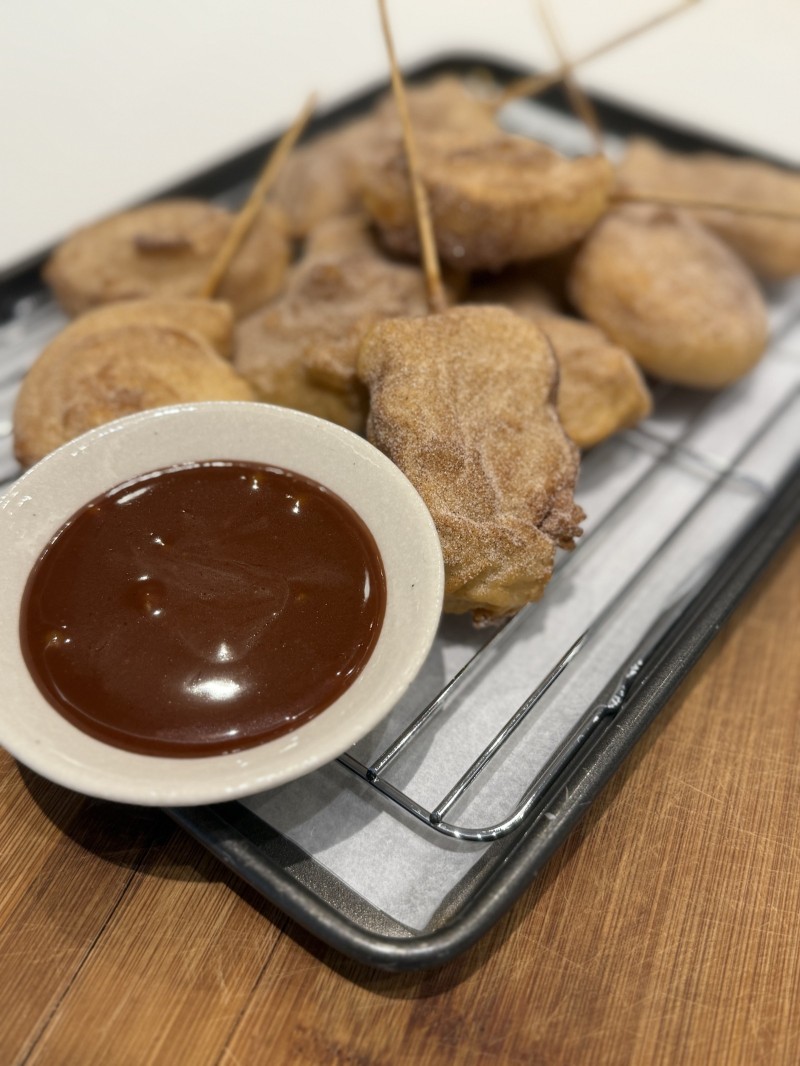
Chewy Korean rice cakes fried until crisp, rolled in cinnamon sugar, and served with a warm, gooey gochujang caramel dip. Sweet, simple, and dangerously addictive. Inspired by Korean street food and the churro carts of Spain, this playful snack is a quick crowd-pleaser you’ll want to make on repeat.
Ingredients
For the Churros Tteok
- 340g (12oz, 12 pieces) garaetteok (cylindrical rice cakes, usually sold from the fridge
- section and firm in texture), OR 4 pieces thin 10-inch (25cm) long fresh garaetteok (fresh is preferred)
- 1 tsp (5g) sugar
- 1 cup (145g) twigim garu (savory frying mix) or tempura flour
For the Cinnamon Sugar
- 3 Tbsp (45g) white sugar
- 1 tsp (3g) ground cinnamon
Gochujang Caramel Dipping Sauce
- ½ cup (100g) granulated sugar
- 1/3 cup (80ml) heavy cream
- 1 Tbsp (15g) unsalted butter
- 2 tsp (14g) gochujang, or to taste
- Pinch of sea or kosher salt
Method
- First, if using firm rice cakes, soak them in warm water and set aside. Or if using fresh tteok, cut two logs into four even pieces, and roll the other two into a spiral shape. Skewer four pieces of tteok onto a, 8-inch (20cm) wooden skewer, and repeat with the other short four pieces. Skewer the spiral shaped rice cakes and cover with cling film and set aside.
- Next, make the churros batter. In a large bowl, whisk together about ⅔ cup of cold iced water, the sugar, and twigim garu. The consistency should be thick but loose enough to dip and coat the rice cakes. Add more water if necessary. Set aside.
- If using the firm tteok, drain the rice cakes and place on a plate, if still slightly too hard to skewer, microwave for about 10-15 seconds just until pliable. Dry off the tteok lightly with a kitchen towel. Using long wooden skewers, piece 3 rice cakes onto each, making 4 skewers in total.
- Tip the cornstarch out onto a plate and lightly dust the rice cakes in the starch, shaking off any excess. Place the skewers on a rack.
- Next, make the gochujang caramel sauce. In a medium saucepan, tip in the sugar and add in 2 Tbsp of water. Swirl it around, to distribute the water and spread the sugar out evenly on the bottom of the pan. Place over medium heat and allow the sugar to melt slowly. Use a wet pastry brush to dissolve and wipe down any crystalizing sugar that forms on the sides of the pan. Allow to bubble and start to turn amber brown. Do not stir. Swirl the pan using the handle slightly to gently to get even color. Once the desired deep golden brown caramel color, remove from heat and add in the cream and butter, it will bubble up vigorously. Whisk together and add in the gochujang and salt. Mix well to incorporate fully. Allow to cool slightly and taste, add more salt or gochujang, if you like. Set aside in a warm place.
- Now, make the cinnamon sugar. Mix the sugar and cinnamon together in a shallow dish. Set aside.
- Next, start frying. In a large wide saucepan, heat about 3-inches (7.5cm) deep of oil over medium heat to 350F (180C).
- While holding the end of the skewers, dip the rice cakes into the churros batter, and swirl to ensure it is fully coated, and place them into the oil. Repeat until all of the skewers are dipped, and fry until golden brown and puffy, about 3 to 4 minutes, flipping as necessary. Remove and place on a rack set over a tray, to cool and allow excess oil to drip off.
- While rice cakes are still hot, toss them in the cinnamon sugar mixture until fully coated. Drizzle with the warm gochujang caramel and serve immediately, with more sauce on the side for dipping.
Shop online
Shop cookery books and affiliated discounts for Judy’s favourite luxury kitchenware, home accessories and beauty products.
Spicy Mussels with Bacon
MUNG BEAN PANCAKE
Restaurants
Explore Seoul’s fun, vibrant and colourful flavours at our Korean-American street-food restaurant: Seoul Bird. Visit and celebrate with us.
Judy’s Korea
Judy’s ultimate guide to Korean food. Get started on your journey! Find out the chef’s top kitchen necessities and best places to eat in Seoul.