Seasoned Spinach

Siguemchi Namul
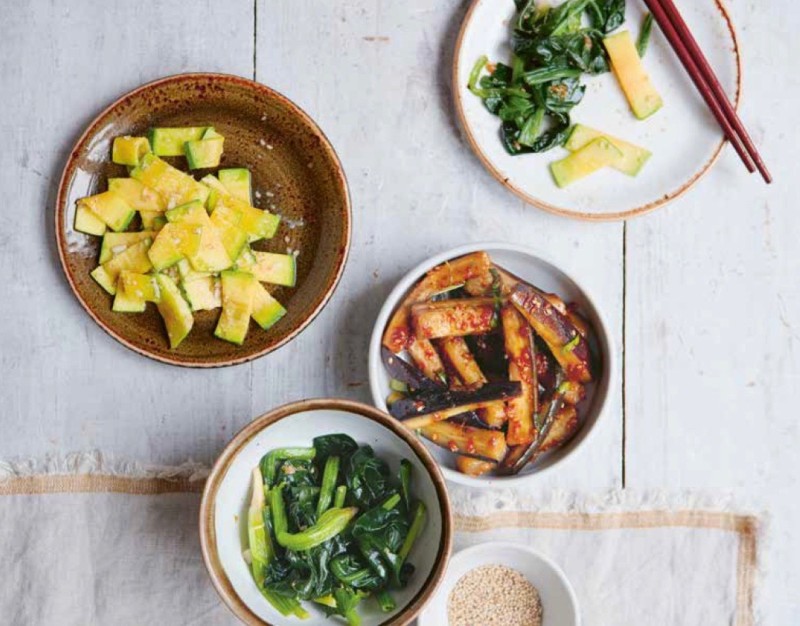
Mature spinach with its sweet purple roots has a heartier, meatier texture than its baby variety. My grandmother used to feed me small bites of this nutritious side dish with her fingers straight into my mouth while she was making it. She always mixed the spinach leaves with her hands to ensure the dressing was evenly coated.

Ingredients

Serves 4 (as a side dish)

  • 450g (1lb) mature spinach with stem and roots
  • sea salt

DRESSING

  • 2 tbsp roasted sesame oil
  • 1 tbsp soy sauce
  • 1 tsp spring onion, finely chopped
  • 1 tsp roasted sesame seeds, crushed
  • 1 tsp sagwa-shikcho (Korean apple vinegar)
  • 1 tsp brown sugar
  • 1 garlic clove, grated or finely chopped
  • black pepper, freshly ground

Method

Fill a large saucepan with water, salt well and bring to the boil. In a large bowl, prepare an ice bath. Rinse the spinach with cold water to remove any dirt, especially around the roots. Remove any hairs from the roots. Cut the spinach into 7cm (2.in) long pieces, keeping the purple roots intact. Split the roots in half horizontally and keep separately.

In a medium bowl, combine the dressing ingredients and stir until the sugar has dissolved. Set aside.

Blanch the spinach in two separate batches. In the boiling salt water, blanch the spinach stem and leaves until just wilted, about 1 minute, remove the spinach from the water and shock in the ice bath. Repeat with the spinach stem with roots, but cook for 1–2 minutes. Remove from the ice bath, drain well and gently squeeze out any excess water.

Gently loosen the clumps of spinach with your fingers and transfer to a bowl. Toss well with the dressing. Cover and chill for about an hour to allow the flavours to mellow before serving.

Browse all recipes

Social media

@judyjoochef Instagram profile imageTteokbokki everywhere? Not a surprise.

As we head into a new year, global food trends are leaning into sweet-spicy flavors, nostalgic comfort, and dishes rooted in everyday culture. Tteokbokki sits right at that intersection.

From its chewy rice cakes to its bold, warming sauce, this is Korean street food that’s always been craveable even long before it became a trend.

Trends may spotlight it, but this is food with history.

Did you know? Tteokbokki was recently named one of the global food trends to watch in a @natgeotravel feature.6 days ago via Instagram
@judyjoochef Instagram profile imageAd. Korean food is so much more than trends. It’s about everyday life, care, and food that’s meant to be shared.

Kimchi isn’t something we eat once in a while…it’s on the table year-round, passed down through generations and made with intention.

I loved being part of this thoughtful piece exploring how Korean food is finding its place in the UK, not by competing with other cuisines, but by being understood on its own terms.

Grateful to be part of this exploration of Korean food and culture in the UK, in partnership with @ocadouk.

Thank you to @bbcnews and @jijiyoung.tv for telling this story so beautifully.

Read the full article via link in bio.

@koreafoods @seoulplaza1 week ago via Instagram
@judyjoochef Instagram profile imageHoliday heat, fierce talent, and the Great 8 chefs battling for the Final Four…this episode had it all. 🎄🔥

I had so much fun judging Tournament of Champions: All-Star Christmas alongside host @guyfieri and fellow judges @jacquestorres & @conantnyc.

If you missed the episode last week, you can catch up on @FoodNetwork @HBOMax @DiscoveryPlus.

#TournamentOfChampions #AllStarChristmas2 weeks ago via Instagram
@judyjoochef Instagram profile imageAd. An authentic Korean meal is never complete without banchan: the colorful side dishes that bring every feast to life. 🇰🇷✨

The Korean table is usually laid edge to edge with these small little plates…and, if you’re out to impress, the more the better! @ocadouk’s Korean aisle makes it so easy for you to get all the ingredients you need for your banchan, delivered straight to your door.

The key is balance and the “rule of five”: every meal should have a mix of five flavours, textures, and colours.

Here are some of the most common banchan you’ll find:
🥬 Kimchi — the must-have
🍚 Steamed short-grain rice
🍲 Soup (a staple of any Korean table)
🍳 Gyeran-jjim (fluffy egg souffle)
🌿 Fresh salads — scallion salad, green salad, crudités with ssamjang
🥒 Pickled veggies — radish, cucumber, lotus root & more
🥔 Korean potato salad (yes… it’s a thing!)
🐟 Grilled fish — croaker or mackerel are classics
🥞 Jeon — savoury pancakes
🥬 Seasoned vegetables — spinach, bean sprouts, etc.
🍖 Braised meats — soy-braised beef, and more
🐠 Dried fish & seafood

And if you’re eating barbecue, you’ll also find lettuce leaves (ssam) for wrapping and our barbecue sauce, ssamjang on the table. 

#KoreanREcipes #Bulgogi #Banchan #KoreanBBQ #KoreanCuisine3 weeks ago via Instagram
Loading