Samgyeopsal Crunchwrap Supreme
Taco Bell’s late-night classic gets a Korean soul food remix with samgyeopsal, gochujang nacho cheese, and spicy sauce.
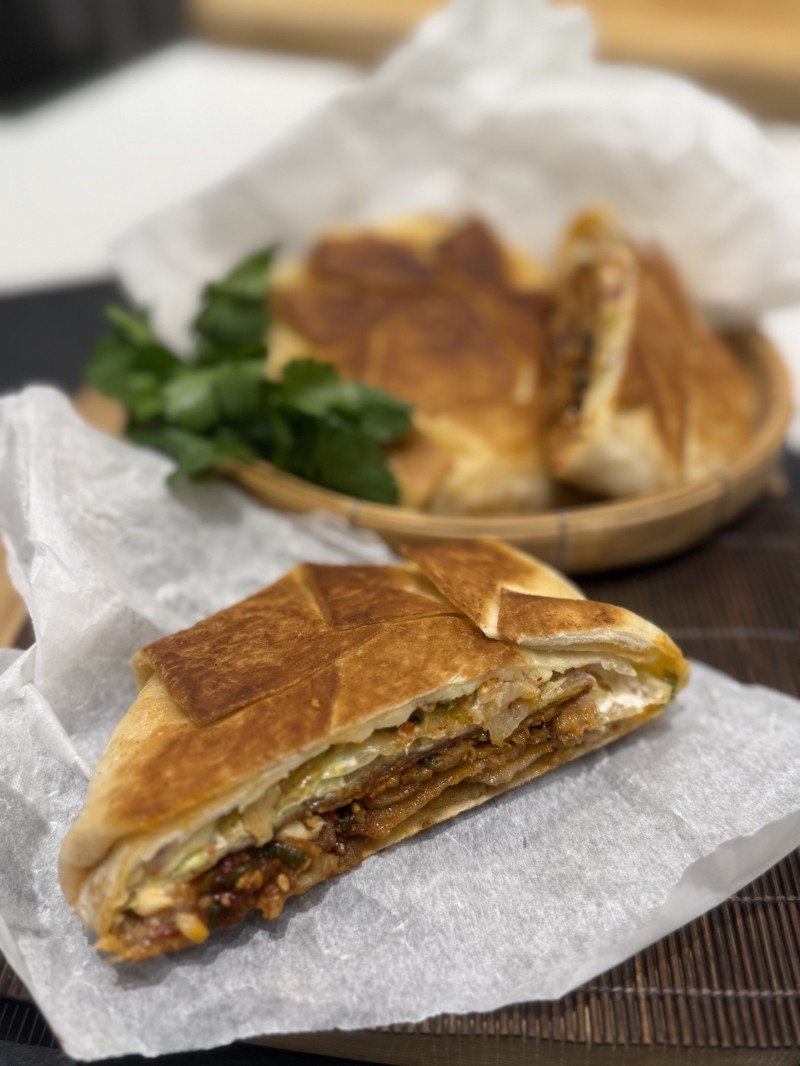
The Crunchwrap Supreme is TikTok royalty. It’s crispy on the outside, melty inside, all in a perfect handheld fold. My remix wraps tender thinly sliced pork belly, spicy dadaegi sauce, and gochujang nacho cheese in a tortilla. Pan fry it to golden perfection…its street food meets drive-thru meets Seoul.
Ingredients
Serves 2
Pork Belly
-
250g skinless pork belly, thinly sliced, trimmed (or skinless, boneless pork belly partially frozen and sliced about ¼-inch, ½ cm thick)
Dadaegi Spicy Sauce
-
1 Tbsp (20g) soy sauce
-
1 tsp (8g) gochugaru, Korean chili flakes
-
1 tsp (4g) thinly sliced Korean green (or jalapeno) and red (or Fresno) chilies
-
1 tsp (5g) rice vinegar
-
1 stalk (15g) green onion, thinly sliced
-
1 tsp (5g) roasted sesame oil
-
¼ tsp (4g) caster sugar
-
½ tsp (3g) mirim
-
½ tsp (2g) roasted sesame seeds
Gochujang Nacho Cheese Sauce
-
6oz (170g) extra-sharp cheddar cheese, grated
-
¾ cup (180g) evaporated milk, plus more if needed
-
1½ tsp (9g) gochujang, Korean chili paste
-
2 tsp (6g) cornstarch
Assembly
-
4 large (14-inch) flour tortilla wraps
-
1 Tbsp (15g) roasted sesame oil
-
10-14 corn tortilla chips, or 2 crispy tostadas
-
4 Tbsp (60g) sour cream
-
1 cup (70g) iceberg lettuce, shredded
-
½ cup (75g) tomatoes, diced
-
½ cup (55g) extra-sharp cheddar cheese, shredded
-
¼ cup (50g) cabbage kimchi, drained and chopped finely
-
2 Tbsp (30g) salted butter
-
handful (5-10g) coriander leaves, finely chopped, for garnish
Method
- First, make the pork belly. If using a whole pork belly, freeze it for 2 hours or until partially frozen; slice into ¼-inch thick strips, about 3-inches long. Set aside.
- Meanwhile make the dadaegi sauce. Stir all ingredients together in a small bowl. Set aside. (Note: this sauce may be stored in the fridge for up to 2 weeks.)
- Next, make the gochujang nacho cheese sauce. Add the cheese and the evaporated milk, gochujang, and cornstarch to a saucepan. Cook over low heat, whisking constantly, until melted and thickened (about 5 minutes). Add more evaporated milk, if needed, for desired consistency. Remove from heat and set aside in a warm place.
- Place a non-stick skillet over medium high heat. Drizzle the pan with a bit of neutral or vegetable oil. Place in the pork belly and cook over high heat for about 3-4 minutes, flipping often, until cooked through and caramelized on the edges. Once done, remove from heat and set aside in a warm place.
- To assemble, warm 4 flour tortillas until pliable, according to the package instructions. Cut a 6-inch diameter circle out of two of the tortillas and set aside.
- Place the two large full tortillas on a flat surface. Spread the cheese sauce in the center of the wraps, leaving about a 3-inch border around the edge, top with the pork belly, and drizzle with the dadaegi sauce and sesame oil, to taste. Place about 5-7 corn tortilla chips (or a crispy tostada) on top. Dollop the corn chips (or tostada) with a few scoops of sour cream, then top with the lettuce, tomatoes, kimchi, and cheese. Place the 6-inch round cut tortilla on top and then fold the edges of the larger tortilla toward the center in a pinwheel pattern and press to seal closed. Flip the wraps over to hold the seams closed.
- Heat up a large non-stick skillet over medium-low heat. Melt the butter in the pan, and place the wrap in seam side down. Fry in the pan until golden brown, about 3-4 minutes and the cheese inside is melted. Flip and fry the other side until crispy brown, about 3-4 minutes. Slice in half with a serrated knife and garnish with fresh coriander leaves. Serve immediately.
Judy’s Korea
Judy’s ultimate guide to Korean food. Get started on your journey! Find out the chef’s top kitchen necessities and best places to eat in Seoul.
Restaurants
Explore Seoul’s fun, vibrant and colourful flavours at our Korean-American street-food restaurant: Seoul Bird. Visit and celebrate with us.
Shop online
Shop cookery books and affiliated discounts for Judy’s favourite luxury kitchenware, home accessories and beauty products.